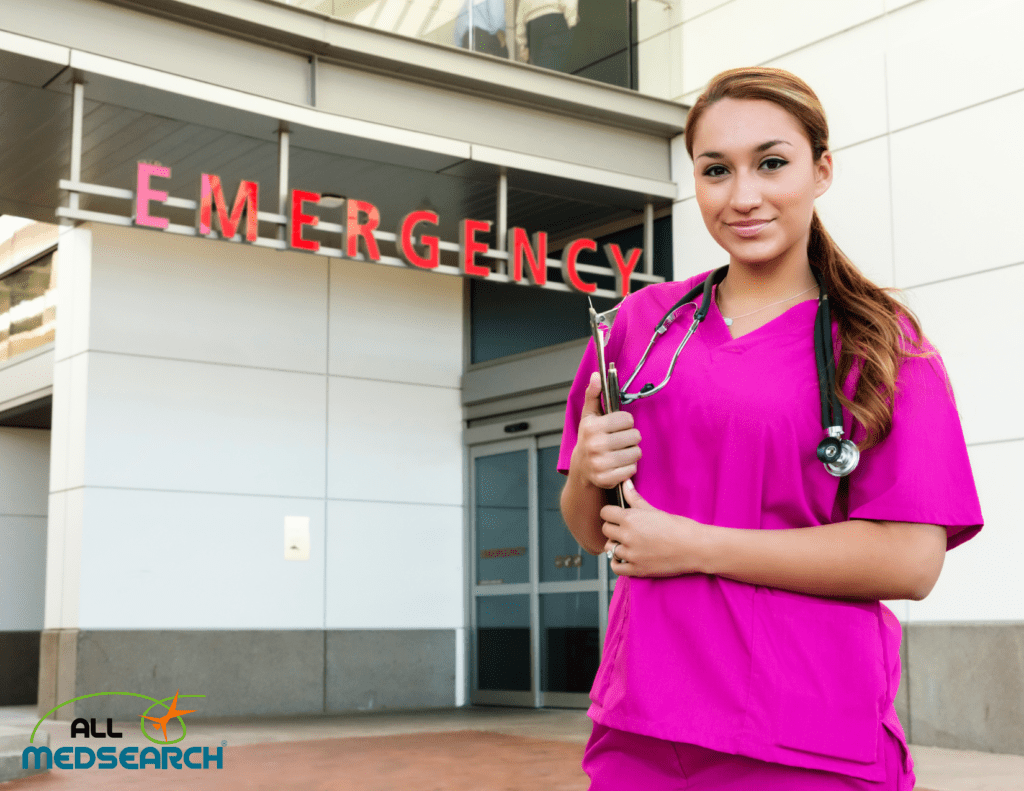
Emergency Room (ER) nurses play a critical role on the front lines of healthcare. Every shift brings something new, from treating life threatening trauma cases to comforting patients experiencing sudden illness or injury. ER nurses must think quickly, act confidently, and provide compassionate care in high pressure situations.
For nurses who thrive in fast paced environments and enjoy variety in their work, emergency nursing can be one of the most exciting and rewarding specialties in healthcare.
What Does an Emergency Room Nurse Do?
Emergency Room nurses provide immediate care to patients arriving at the hospital with urgent or critical health issues. Patients may arrive by ambulance, walk in with injuries, or be referred from other healthcare providers.
Key responsibilities often include:
- Assessing patients quickly through triage to determine the urgency of care
- Monitoring vital signs and identifying life threatening conditions
- Administering medications and IV treatments
- Assisting physicians during emergency procedures
- Stabilizing trauma patients
- Educating patients and families about treatment and follow up care
- Documenting patient information and coordinating with the healthcare team
ER nurses care for patients of all ages and conditions, which means strong clinical knowledge and adaptability are essential.
Skills That Make a Great ER Nurse
Emergency nursing requires a unique combination of technical skills and personal qualities. Some of the most important include:
- Critical thinking and fast decision making
- Strong communication and teamwork
- Ability to stay calm under pressure
- Excellent assessment skills
- Emotional resilience and compassion
- Because emergencies can change quickly, ER nurses must be prepared to adapt to rapidly evolving situations.
Work Environment
Emergency Room nurses work in hospital emergency departments that operate 24 hours a day. Shifts may include days, nights, weekends, and holidays.
The ER environment is often fast paced and unpredictable. Nurses may treat everything from minor injuries to severe trauma cases in the same shift. While the work can be intense, many ER nurses find the variety and impact of their role incredibly rewarding.
Education and Certifications
To become an Emergency Room nurse, candidates typically need:
- An Associate Degree in Nursing (ADN) or Bachelor of Science in Nursing (BSN)
- A valid Registered Nurse (RN) license
- Basic Life Support (BLS) certification
- Advanced Cardiovascular Life Support (ACLS) certification
- Pediatric Advanced Life Support (PALS) certification
Some ER nurses also pursue additional certifications such as Certified Emergency Nurse (CEN) to further advance their expertise.
Why Nurses Choose Emergency Nursing
Many nurses are drawn to the emergency department because of the dynamic nature of the work. ER nurses have the opportunity to make a life saving difference every day while developing a wide range of clinical skills.
Benefits of working in the ER often include:
- Exposure to a variety of medical conditions
- Opportunities to build advanced clinical skills
- Strong teamwork and collaboration
- A fast paced environment where no two shifts are the same
Looking for Your Next Nursing Opportunity?
At All Med Search, we work with hospitals across the United States to connect talented nurses with exciting career opportunities in specialties like Emergency Medicine, Med Surg, ICU, and more.
If you are interested in exploring ER nursing opportunities in the U.S., our team is here to help guide you through the process.
Contact us today to learn more about current openings and relocation opportunities.